


Sale!
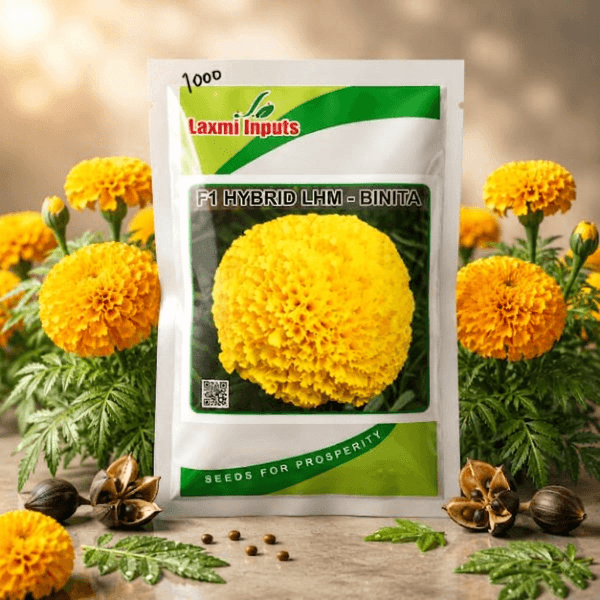
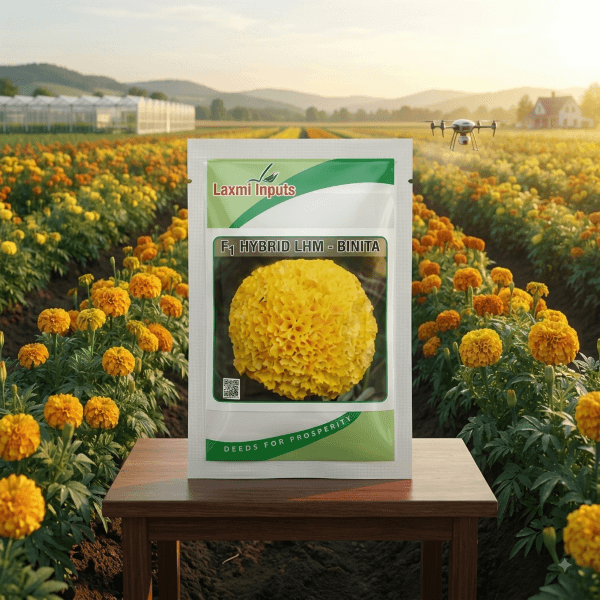
LHM-Binita F1 Hybrid Marigold Laxmi Inputs (1000 Seeds)
Original price was: ₹2,100.00.₹1,800.00Current price is: ₹1,800.00.
| Brand | Laxmi Inputs (India) Pvt. Ltd. |
|---|---|
| Country Of Origin | India |
| Ideal For | Farming |
| Materials | Seeds |
| Pack of | 1 |
| Type | Vegetable Seeds |
5 in stock
Product Description
| Attribute | Description |
|---|---|
| Product Overview | A premium F1 hybrid African Marigold (Tagetes erecta) variety developed for high-yield commercial cultivation. It is characterized by vigorous growth, exceptional uniformity, and vibrant, large blooms that are highly sought after in wholesale flower markets. |
| Agricultural Benefits | Superior hybrid vigor leads to faster establishment and robust field performance. The variety exhibits excellent adaptability to diverse agro-climatic conditions, reducing risk for farmers and ensuring consistent harvest cycles. |
| Crop Suitability | Highly suitable for commercial loose flower production, garland making, large-scale event decorations, and religious offerings. It thrives in both field-grown open conditions and controlled environment setups. |
| Sowing Season | Versatile variety adaptable to Kharif, Rabi, and Summer seasons depending on regional microclimates. It is best sown in nursery beds or pro-trays and transplanted to the field after 20–30 days. |
| Days to Maturity | Early-maturing variety, typically reaching the first harvest 55–65 days after transplantation. This rapid cycle allows for multiple crop rotations and faster returns on investment. |
| Yield Potential | Engineered for high-density flower production. The variety produces a high number of marketable flowers per plant, contributing to an impressive tonnage per acre compared to open-pollinated local varieties. |
| Disease Resistance | Possesses strong genetic resistance to common floral pathogens, including minor soil-borne diseases and foliage spots. Its robust constitution helps withstand environmental stressors common in commercial farming. |
| Fruit/Plant Characteristics | Plant: Tall, sturdy, and bushy habit with excellent branching capacity. Flower: Large, compact, fully double ball-shaped blooms with a firm texture and vibrant color, ensuring minimal breakage during transport. |
| Key Features | High-germination F1 hybrid seeds, uniform flower size, excellent petal density, prolonged flowering duration, and superior color retention post-harvest. |
| Farming Advantages | The uniform maturity and consistent flower size significantly reduce labor costs during harvesting and sorting. Strong stems minimize lodging, making flower plucking efficient and ergonomic. |
| Growing Conditions | Prefers well-drained, fertile, sandy-loam soils with a pH of 6.5–7.5. Requires adequate sunlight (5–6 hours daily) and balanced NPK fertilizer management, particularly potassium, to support heavy flowering. |
| Market Benefits | Premium visual appeal makes it the preferred choice for traders and consumers. Excellent shelf life ensures the produce remains fresh for long-distance transport, maximizing price realization in competitive markets. |
Related products
-
Sale!

Acsen Hyveg Cauliflower Damini (10 GM)
Original price was: ₹1,243.00.₹700.00Current price is: ₹700.00. Add to cart -
Sale!
Acsen Hyveg Cucumber Sumitra (25 GM)
Original price was: ₹903.00.₹650.00Current price is: ₹650.00. Add to cart -
Sale!
Acsen Hyveg Radish Yamini (250 GM)
Original price was: ₹662.00.₹600.00Current price is: ₹600.00. Add to cart -
Sale!
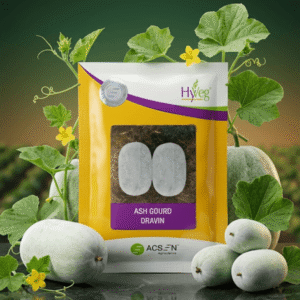
Ash Gourd Dravin Acsen Hyveg(50 GM)
Original price was: ₹720.00.₹500.00Current price is: ₹500.00. Add to cart